Daymark GoodsSponsored
Meet the bottle made for every route. Cold water, all day.
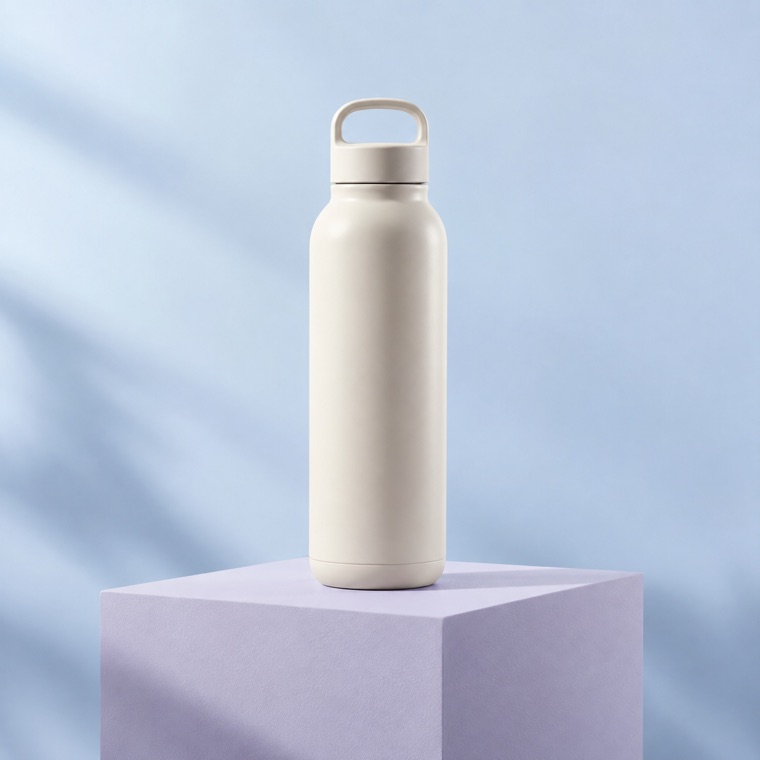
Daymark GoodsOne bottle. All day.Shop now
0 likes0 comments
For Daymark Goods, we ask whether showing a bottle in use brings more purchases than a studio image. The copy, offer and audience stay fixed.
Swipe to compare both ads. Use the moments above to explore the evidence.
Meet the bottle made for every route. Cold water, all day.
Meet the bottle made for every route. Cold water, all day.

Scroll to follow the test
The studio ad is costing US$40 per purchase. Excutia writes the question before making a new image.
The copy, offer, eligible audience and placement stay fixed. Separate groups receive A or B for a planned 60 days. Purchases per assigned person are the decision metric.
A has 1,200 likes, 120 comments, 2.2% engagement and 56 purchases. B has 1,650 likes, 150 comments, 3.0% engagement and 68 purchases.
Excutia: B draws more interaction, but the purchase gap is too small to decide.
A's CTR climbs from 1.8% to 1.9%; B reaches 3.6% engagement. Purchases are 132 for A and 165 for B.
Excutia: delivery and purchase tracking look healthy. Continue the planned window.
A has 216 purchases; B has 280. Both groups have reached 180,000 assigned people.
Excutia: the purchase gap is widening, but the 60-day review window remains open.
At equal US$11,520 spend and 240,000 assigned people per ad, B brings 384 purchases at US$30 each; A brings 288 at US$40 each. The purchase-rate difference passes a two-sided 95% check.
Excutia: carry the in-context setting into the next brief, then test the message.
At equal spend, B delivers 33% more purchases at 25% lower cost per purchase. Keep the in-context image and test the message next.
The purchase-rate difference is statistically significant at the planned 95% level. Likes and comments were monitoring signals, not the decision metric.
Start with a 30-minute call, then share read-only access or an export. Your free report arrives within 48 hours of receiving the data.
Get your free report